Cardiovascular Health Potential of Bambara Groundnut (Vigna subterranea): A Focused Review of Current Evidence and Research Gaps
DOI:
https://doi.org/10.83080/rejost.vol6no9.350Keywords:
Bambara groundnut (Vigna subterranea), Cardiovascular health, Blood pressure, Lipid metabolism, Oxidative stress, Gut-heart axisAbstract
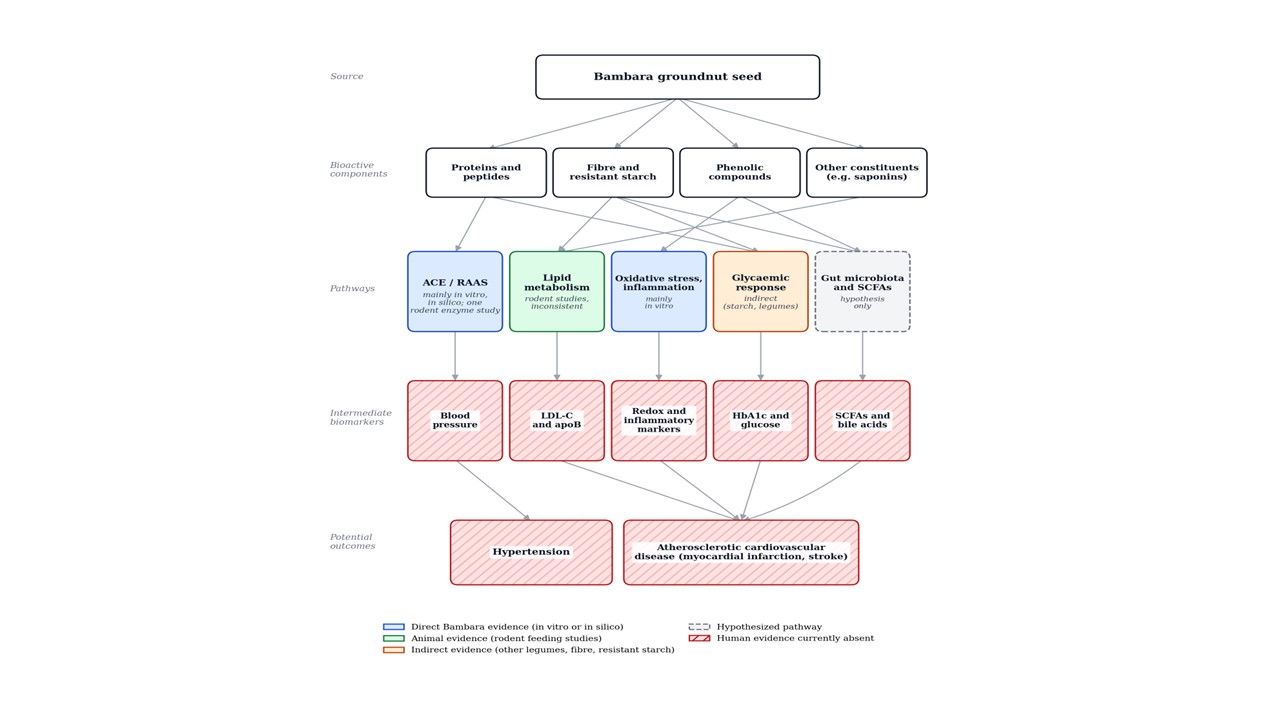
Cardiovascular diseases remain a major cause of premature mortality, and dietary control of blood pressure, atherogenic lipids, oxidative stress, inflammation and glycaemic dysregulation is important for prevention. Bambara groundnut (Vigna subterranea (L.) Verdc.) is an underutilized African legume whose cardiovascular relevance has been investigated, but the evidence is dispersed across experimental systems. This focused narrative review evaluated the cardiovascular health potential of Bambara groundnut, with emphasis on lipid regulation, blood-pressure pathways, oxidative stress, inflammation, glycaemic control and the gut-heart axis. A focused narrative literature search was conducted through 18 September 2026 using PubMed, African Journals Online, publisher-indexed records and reference lists of relevant studies and reviews. Studies were eligible when Bambara groundnut, or a fraction, extract or diet derived from it, had a cardiovascular-relevant endpoint or a mechanistically interpretable pathway. Evidence was classified by experimental level and by whether it was directly Bambara-specific or extrapolated from other legumes. Of the 15 Bambara-specific primary studies synthesized, 11 were in vitro or in silico studies (mainly of antioxidant activity, enzyme inhibition and starch digestion), four were rodent feeding studies and none was a human intervention study. Rodent findings on plasma lipids were inconsistent: an early study reported exaggerated hypercholesterolaemia with a Bambara diet, whereas three later studies of co-formulated or fermented preparations reported improved lipid profiles that cannot be attributed to Bambara groundnut alone. No eligible human randomized controlled trial was identified in the databases and sources searched. The evidence therefore supports a plausible multi-pathway hypothesis rather than an established clinical effect. Controlled human intervention studies using standardized preparations, adequately powered designs and validated cardiovascular endpoints are required before health claims can be supported.
References
Adedayo, B. C., Anyasi, T. A., Taylor, M. J. C., Rautenbauch, F., Le Roes-Hill, M., & Jideani, V. A. (2021). Phytochemical composition and antioxidant properties of methanolic extracts of whole and dehulled Bambara groundnut (Vigna subterranea) seeds. Sci. Rep., 11, 14116. https://doi.org-/10.1038/s41598-021-93525-w
Ademiluyi, A. O., & Oboh, G. (2015). Angiotensin I-converting enzyme inhibitory activity and hypocholesterolemic effect of some fermented tropical legumes in streptozotocin-induced diabetic rats. Int. J. Diabetes Dev. Ctries., 35(4), 493–500. https://doi.org/10.1007/s13410-015-0323-2
Ademiluyi, A. O., Omojokun, O. S., & Oboh, G. (2019). Traditional fermented condiments modulate biochemical indices in high cholesterol diet-fed rats. J. Sustain. Technol., 10(1), 1–12.
Afolabi, T. A., Opara, A. O., Kareem, S. O., & Oladoyinbo, F. O. (2018). In vitro digestibility of hydrothermally modified Bambara groundnut (Vigna subterranean L.) starch and flour. Food Sci. Nutr., 6(1), 36–46. https://doi.org/10.1002/fsn3.510
Arise, A. K., Alashi, A. M., Nwachukwu, I. D., Malomo, S. A., Aluko, R. E., & Amonsou, E. O. (2017). Inhibitory properties of Bambara groundnut protein hydrolysate and peptide fractions against angiotensin-converting enzymes, renin and free radicals. J. Sci. Food Agric., 97(9), 2834–2841. https://doi.org/10.1002/jsfa.8112
Azman Halimi, R., Barkla, B. J., Mayes, S., & King, G. J. (2019). The potential of the underutilized pulse Bambara groundnut (Vigna subterranea (L.) Verdc.) for nutritional food security. J. Food Compos. Anal., 77, 47–59. https://doi.org/10.1016-/j.jfca.2018.12.008
Baethge, C., Goldbeck-Wood, S., & Mertens, S. (2019). SANRA - a scale for the quality assessment of narrative review articles. Res. Integr. Peer Rev., 4, 5. https://doi.org-/10.1186/s41073-019-0064-8
Chelangat, M., Muturi, P., Gichimu, B., Gitari, J., & Mukono, S. (2023). Nutritional and phytochemical composition of Bambara groundnut (Vigna subterranea [L.] Verdc) landraces in Kenya. Int. J. Agron., 2023, 9881028. https://doi.org/10.1155/2023/98-81028
Chinma, C. E., Abu, J. O., Afolabi, F. H., Nwankwo, P., Adebo, J. A., Oyeyinka, S. A., Njobeh, P. B., & Adebo, O. A. (2023). Structure, in vitro starch digestibility and physicochemical properties of starch isolated from germinated Bambara groundnut. J. Food Sci. Technol., 60(1), 190–199. https://doi.org/10.1007/s13197-022-05604-z
Chinnapun, D., & Sakorn, N. (2022). Structural characterization and antioxidant and anti-inflammatory activities of new chemical constituent from the seeds of Bambara groundnut (Vigna subterranea (L.) Verdc.). CyTA J. Food, 20(1), 93–101. https://-doi.org/10.1080/19476337.2022.2087741
Dabai, F. D., Walker, A. F., Sambrook, I. E., Welch, V. A., Owen, R. W., & Abeyasekera, S. (1996). Comparative effects on blood lipids and faecal steroids of five legume species incorporated into a semi-purified, hypercholesterolaemic rat diet. Br. J. Nutr., 75(4), 557–571. https://doi.org/10.1079/-BJN19960159
Dhyani, N., Tian, C., Gao, L., Rudebush, T. L., & Zucker, I. H. (2024). Nrf2-Keap1 in cardiovascular disease: Which is the cart and which the horse? Physiology, 39(5), 288–301. https://doi.org/10.1152/physiol.0001-5.2024
Ferrario, C. M. (2010). New physiological concepts of the renin-angiotensin system from the investigation of precursors and products of angiotensin I metabolism. Hypertension, 55(2), 445–452. https://doi-.org/10.1161/HYPERTENSIONAHA.109.145839
Förstermann, U., Xia, N., & Li, H. (2017). Roles of vascular oxidative stress and nitric oxide in the pathogenesis of atherosclerosis. Circ. Res., 120(4), 713–735. https://doi.org/-10.1161/CIRCRESAHA.116.309326
Fu, L., Zhang, G., Qian, S., Zhang, Q., & Tan, M. (2022). Associations between dietary fiber intake and cardiovascular risk factors: An umbrella review of meta-analyses of randomized controlled trials. Front. Nutr., 9, 972399. https://doi.org/10.3389/fnut.202-2.972399
Ghavami, A., Ziaei, R., Talebi, S., Barghchi, H., Nattagh-Eshtivani, E., Moradi, S., Rahbarinejad, P., Mohammadi, H., Ghasemi-Tehrani, H., Marx, W., & Askari, G. (2023). Soluble fiber supplementation and serum lipid profile: A systematic review and dose-response meta-analysis of randomized controlled trials. Adv. Nutr., 14(3), 465–474. https://doi.org/-10.1016/j.advnut.2023.01.005
Grundy, S. M., Stone, N. J., Bailey, A. L., Beam, C., Birtcher, K. K., Blumenthal, R. S., Braun, L. T., de Ferranti, S., Faiella-Tommasino, J., Forman, D. E., Goldberg, R., Heidenreich, P. A., Hlatky, M. A., Jones, D. W., Lloyd-Jones, D., Lopez-Pajares, N., Ndumele, C. E., Orringer, C. E., Peralta, C. A., Saseen, J. J., Smith, S. C., Jr., Sperling, L., Virani, S. S., & Yeboah, J. (2019). 2018 AHA/ACC/AACVPR/AAPA/ABC/ACPM/ADA/AGS/APhA/ASPC/NLA/PCNA guideline on the management of blood cholesterol: A report of the American College of Cardiology/American Heart Association Task Force on Clinical Practice Guidelines. Circulation, 139(25), e1082–e1143. https://doi.org/10.1161/CIR.00000-00000000625
Gunness, P., & Gidley, M. J. (2010). Mechanisms underlying the cholesterol-lowering properties of soluble dietary fibre polysaccharides. Food Funct., 1(2), 149–155. https://doi.org/10.1039/C0FO00080A
Hooijmans, C. R., Rovers, M. M., de Vries, R. B. M., Leenaars, M., Ritskes-Hoitinga, M., & Langendam, M. W. (2014). SYRCLE’s risk of bias tool for animal studies. BMC Med. Res. Methodol., 14, 43. https://doi.org-/10.1186/1471-2288-14-43
Hopewell, S., Chan, A.-W., Collins, G. S., Hróbjartsson, A., Moher, D., Schulz, K. F., Tunn, R., Aggarwal, R., Berkwits, M., Berlin, J. A., Bhandari, N., Butcher, N. J., Campbell, M. K., Chidebe, R. C. W., Elbourne, D., Farmer, A., Fergusson, D. A., Golub, R. M., Goodman, S. N., Hoffmann, T. C., Ioannidis, J. P. A., Kahan, B. C., Knowles, R. L., Lamb, S. E., Lewis, S., Loder, E., Offringa, M., Ravaud, P., Richards, D. P., Rockhold, F. W., Schriger, D. L., Siegfried, N. L., Staniszewska, S., Taylor, R. S., Thabane, L., Torgerson, D., Vohra, S., White, I. R., & Boutron, I. (2025). CONSORT 2025 statement: Updated guideline for reporting randomised trials. BMJ, 389, e081123. https://doi.org/10.113-6/bmj-2024-081123
Huang, D., Ou, B., & Prior, R. L. (2005). The chemistry behind antioxidant capacity assays. J. Agric. Food Chem., 53(6), 1841–1856. https://doi.org/10.1021/jf030723c
Jenkins, D. J. A., Kendall, C. W. C., Augustin, L. S. A., Mitchell, S., Sahye-Pudaruth, S., Blanco Mejia, S., Chiavaroli, L., Mirrahimi, A., Ireland, C., Bashyam, B., Vidgen, E., de Souza, R. J., Sievenpiper, J. L., Coveney, J., Leiter, L. A., & Josse, R. G. (2012). Effect of legumes as part of a low glycemic index diet on glycemic control and cardiovascular risk factors in type 2 diabetes mellitus: A randomized controlled trial. Arch. Intern. Med., 172(21), 1653–1660. https://doi.org-/10.1001/2013.jamainternmed.70
Libby, P., Buring, J. E., Badimon, L., Hansson, G. K., Deanfield, J., Bittencourt, M. S., Tokgözoğlu, L., & Lewis, E. F. (2019). Atherosclerosis. Nat. Rev. Dis. Primers, 5(1), 56. https://doi.org/10.1038/s41572-019-0106-z
Low Wang, C. C., Hess, C. N., Hiatt, W. R., & Goldfine, A. B. (2016). Clinical update: Cardiovascular disease in diabetes mellitus: Atherosclerotic cardiovascular disease and heart failure in type 2 diabetes mellitus – Mechanisms, management, and clinical considerations. Circulation, 133(24), 2459–2502. https://doi.org/10.1161/CIRCULA-TIONAHA.116.022194
Lu, Y., Zhang, Y., Zhao, X., Shang, C., Xiang, M., Li, L., & Cui, X. (2022). Microbiota-derived short-chain fatty acids: Implications for cardiovascular and metabolic disease. Front. Cardiovasc. Med., 9, 900381. https://doi.org/10.3389/fcvm.2022.900381
Majola, N. G., Gerrano, A. S., Shimelis, H., & Mashilo, J. (2025). Analyses of phytochemicals and nutritional compositions in Bambara groundnut (Vigna subterranea [L.] Verdc). J. Agric. Food Res., 19, 101610. https://doi.org/10.1016/j.j-afr.2024.101610
Majumder, K., & Wu, J. (2015). Molecular targets of antihypertensive peptides: Understanding the mechanisms of action based on the pathophysiology of hypertension. Int. J. Mol. Sci., 16(1), 256–283. https://doi.org/10.3390/ijms16010256
Manach, C., Williamson, G., Morand, C., Scalbert, A., & Rémésy, C. (2005). Bioavailability and bioefficacy of polyphenols in humans. I. Review of 97 bioavailability studies. Am. J. Clin. Nutr., 81(1 Suppl.), 230S–242S. https://doi.org/10.1093/ajcn/8-1.1.230S
Mashau, M. E., Ramatsetse, K. E., Takalani, T., Bamidele, O. P., & Ramashia, S. E. (2025). Effect of bioprocessing on the nutritional composition, antinutrients, functional properties, and metabolites of Bambara groundnut and its prospective food applications: A review. Molecules, 30(11), 2356. https://doi.org/10.3390/molecules-30112356
Mashau, M. E., Takalani, T., Ramashia, S. E., Moyo, N. B., & Bamidele, O. P. (2026). Exploring the effect of dehulling and malting on the antioxidant properties, phenolic composition, and metabolite profile of Bambara groundnut (Vigna subterranea) flour obtained from three varieties. Sustain. Food Technol. https://doi.org/10.1039/-D5FB00611B
McEvoy, J. W., McCarthy, C. P., Bruno, R. M., Brouwers, S., Canavan, M. D., Ceconi, C., Christodorescu, R. M., Daskalopoulou, S. S., Ferro, C. J., Gerdts, E., Hanssen, H., Harris, J., Lauder, L., McManus, R. J., Molloy, G. J., Rahimi, K., Regitz-Zagrosek, V., Rossi, G. P., Sandset, E. C., Scheenaerts, B., Staessen, J. A., Uchmanowicz, I., Volterrani, M., Touyz, R. M., & ESC Scientific Document Group. (2024). 2024 ESC guidelines for the management of elevated blood pressure and hypertension. Eur. Heart J., 45(38), 3912–4018. https://doi.org/-10.1093/eurheartj/ehae178
Mendes, V., Niforou, A., Kasdagli, M. I., Ververis, E., & Naska, A. (2023). Intake of legumes and cardiovascular disease: A systematic review and dose-response meta-analysis. Nutr. Metab. Cardiovasc. Dis., 33(1), 22 – 37. https://doi.org/10.1016/-j.numecd.2022.10.006
Mune Mune, M. A., Minka, S. R., & Henle, T. (2018). Investigation on antioxidant, angiotensin converting enzyme and dipeptidyl peptidase IV inhibitory activity of Bambara bean protein hydrolysates. Food Chem., 250, 162–169. https://doi.org/-10.1016/j.foodchem.2018.01.001
Nogal, A., Valdes, A. M., & Menni, C. (2021). The role of short-chain fatty acids in the interplay between gut microbiota and diet in cardio-metabolic health. Gut Microbes, 13(1), 1897212. https://doi.org/10.1080/-19490976.2021.1897212
Oboh, G., Ademiluyi, A. O., & Akindahunsi, A. A. (2009). Changes in polyphenols distribution and antioxidant activity during fermentation of some underutilized legumes. Food Sci. Technol. Int., 15(1), 41–46. https://doi.org/10.1177/1082013208101022
Oyeyinka, S. A., Abdulsalam, A. O., Ahmed El-Imam, A. M., Oyeyinka, A. T., Olagunju, O. F., Kolawole, F. L., Arise, A. K., Adedeji, E. O., & Njobeh, P. B. (2021). Total phenolic content, antioxidant, anti-inflammatory and anti-microbial potentials of Bambara groundnut (Vigna subterranea L.) seed extract. Br. Food J., 123(11), 3421–3435. https://doi.org/10.1108/BFJ-07-2020-0637
Pinaffi-Langley, A. C. da C., Tarantini, S., Hord, N. G., & Yabluchanskiy, A. (2024). Polyphenol-derived microbiota metabolites and cardiovascular health: A concise review of human studies. Antioxidants, 13(12), 1552. https://doi.org/10.3390/antiox1312-1552
Pinzi, L., & Rastelli, G. (2019). Molecular docking: Shifting paradigms in drug discovery. Int. J. Mol. Sci., 20(18), 4331. https://doi.org/10.3390/ijms20184331
Quek, J., Lim, G., Lim, W. H., Ng, C. H., So, W. Z., Toh, J., Pan, X. H., Chin, Y. H., Muthiah, M. D., Chan, S. P., Foo, R. S. Y., Yip, J., Neelakantan, N., Chong, M. F. F., Loh, P. H., & Chew, N. W. S. (2021). The association of plant-based diet with cardiovascular disease and mortality: A meta-analysis and systematic review of prospect cohort studies. Front. Cardiovasc. Med., 8, 756810. https://doi.org/10.3389-/fcvm.2021.756810
Ramatsetse, K. E., Ramashia, S. E., & Mashau, M. E. (2023). A review on health benefits, antimicrobial and antioxidant properties of Bambara groundnut (Vigna subterranean). Int. J. Food Prop., 26(1), 91–107. https://doi.org/10.1080/10942912.2022.2153864
Reyneke, G. L., Beck, E. J., Lambert, K., & Neale, E. P. (2023). The effect of non-oil seed legume intake on blood pressure: A systematic review and meta-analysis of randomized controlled trials. Adv. Nutr., 14(4), 637–651. https://doi.org/10.1016/-j.advnut.2023.04.002
Ridker, P. M. (2016). From C-reactive protein to interleukin-6 to interleukin-1: Moving upstream to identify novel targets for atheroprotection. Circ. Res., 118(1), 145–156. https://doi.org/10.1161/CIRCRESA-HA.115.306656
Saetang, J., Haewphet, T., Nilsuwan, K., & Benjakul, S. (2025). ACE- and DPP-IV-inhibitory peptides from Bambara groundnut hydrolysate: Elucidation using computational tools and molecular docking. Biology, 14(5), 511. https://doi.org/-10.3390/biology14050511
Shi, J., Arunasalam, K., Yeung, D., Kakuda, Y., Mittal, G., & Jiang, Y. (2004). Saponins from edible legumes: Chemistry, processing, and health benefits. J. Med. Food, 7(1), 67–78. https://doi.org/10.1089/109662004322-984734
Tan, W. C., Tan, C. H., Nyam, K. L., Tan, C. P., & Julkifle, A. (2021). Nutritive Bambara groundnut powdered drink mix: Characterization and in-vivo assessment of the cholesterol-lowering effect. J. Food Sci. Technol., 58(8), 2992–3000. https://doi.org-/10.1007/s13197-020-04802-x
Tang, W. H. W., & Hazen, S. L. (2017). The gut microbiome and its role in cardiovascular diseases. Circulation, 135(11), 1008–1010. https://doi.org/10.1161/CIRCULATIONAHA.116.024251
Thijssen, D. H. J., Bruno, R. M., van Mil, A. C. C. M., Holder, S. M., Faita, F., Greyling, A., Zock, P. L., Taddei, S., Deanfield, J. E., Lüscher, T., Green, D. J., & Ghiadoni, L. (2019). Expert consensus and evidence-based recommendations for the assessment of flow-mediated dilation in humans. Eur. Heart J., 40(30), 2534–2547. https://-doi.org/10.1093/eurheartj/ehz350
Thorisdottir, B., Arnesen, E. K., Bärebring, L., Dierkes, J., Lamberg-Allardt, C., Ramel, A., Nwaru, B. I., Söderlund, F., & Åkesson, A. (2023). Legume consumption in adults and risk of cardiovascular disease and type 2 diabetes: A systematic review and meta-analysis. Food Nutr. Res., 67, 9541. https://doi.org/10.29219/fnr.v67.9541
Van der Worp, H. B., Howells, D. W., Sena, E. S., Porritt, M. J., Rewell, S., O’Collins, V., & Macleod, M. R. (2010). Can animal models of disease reliably inform human studies? PLoS Med., 7(3), e1000245. https://doi.org/10.1371/journal.pmed.1000245
Venter, A., Emmambux, M. N., & Duodu, K. G. (2024). Microwave pretreatment of presoaked Bambara groundnut seeds enhances the functionality and phenolics-related antioxidant properties of the resultant flour. J. Food Biochem., 2024, 8866089. https://doi.org/10.1155/2024/8866089
Vermeirssen, V., Van Camp, J., & Verstraete, W. (2004). Bioavailability of angiotensin I converting enzyme inhibitory peptides. Br. J. Nutr., 92(3), 357–366. https://doi.org/10.1079/BJN20041189
Viguiliouk, E., Glenn, A. J., Nishi, S. K., Chiavaroli, L., Seider, M., Khan, T., Bonaccio, M., Iacoviello, L., Blanco Mejia, S., Jenkins, D. J. A., Kendall, C. W. C., Kahleová, H., Rahelić, D., Salas-Salvadó, J., & Sievenpiper, J. L. (2019). Associations between dietary pulses alone or with other legumes and cardiometabolic disease outcomes: An umbrella review and updated systematic review and meta-analysis of prospective cohort studies. Adv. Nutr., 10(Suppl. 4), S308–S319. https://doi.org/10.1093/advances/nmz113
Witkowski, M., Weeks, T. L., & Hazen, S. L. (2020). Gut microbiota and cardiovascular disease. Circ. Res., 127(4), 553–570. https://doi.org/10.1161/CIRCRESAHA.120.316242
World Health Organization. (2025a). Cardiovascular diseases (CVDs) [Fact sheet, updated 31 July 2025]. World Health Organization. https://www.who.int/news-room/fact-sheets/detail/cardiovascular-diseases-(cvds). Accessed 20 September 2026.
World Health Organization. (2025b). Hypertension [Fact sheet, updated 25 September 2025]. World Health Organization. https://www.who.int/news-room/fact-sheets/detail/hypertension. Accessed 20 September 2026.
Xiong, K., Wang, J., Kang, T., Xu, F., & Ma, A. (2021). Effects of resistant starch on glycaemic control: A systematic review and meta-analysis. Br. J. Nutr., 125(11), 1260–1269. https://doi.org/10.1017/S00071145-20003700
Downloads
Published
How to Cite
Issue
Section
License
Copyright (c) 2026 Babatunde Joshua

This work is licensed under a Creative Commons Attribution-NonCommercial-ShareAlike 4.0 International License.
Unless a different licence is clearly indicated for a particular article, articles published in the journal are made available under the Creative Commons Attribution 4.0 International (CC BY 4.0) licence. This licence permits others to read, download, copy, distribute, share, adapt, and build upon the published work, including for commercial purposes, provided that appropriate credit is given to the original author(s), the article is properly cited, and any changes made to the original work are clearly indicated.