Enhanced Credit Card Default Prediction Using a Multilayer Perceptron With Z-Score–Based Outlier Handling on The UCI Dataset
DOI:
https://doi.org/10.83080/rejost.vol5no8.230Keywords:
Machine Learning, Deep Learning, Credit Default, Z-Score handling, Deep Neural NetworkAbstract
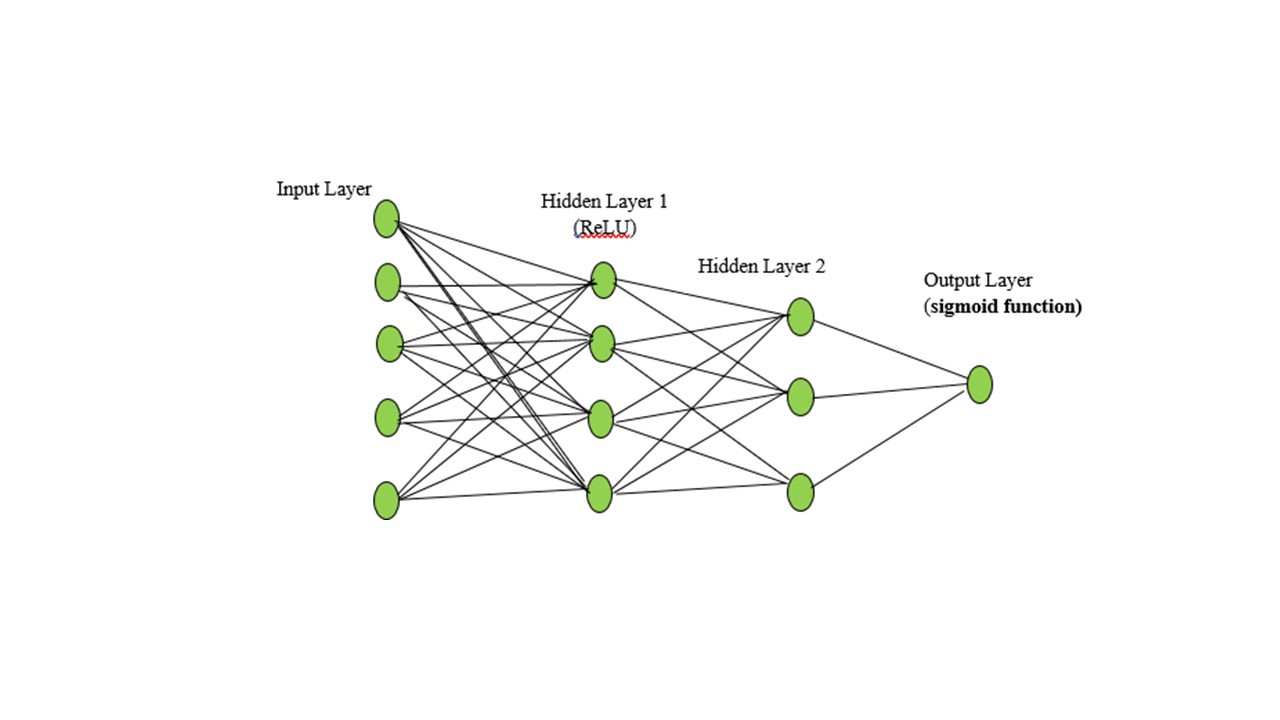
Credit card default prediction remains a central challenge for financial institutions, particularly due to data irregularities, class imbalance, and outlier-driven distortions. While Deep Neural Networks (DNNs) have been widely adopted, their performance is often sensitive to noisy data and computationally demanding. This study investigates whether integrating z-score–based outlier removal with a Multilayer Perceptron (MLP) can enhance predictive performance on the UCI Default of Credit Card Clients dataset. The methodology involved removing outliers using the z-score method per class, standardizing the dataset, partitioning the data into training and test sets, and developing a two-hidden-layer MLP model. After detecting and removing outliers separately within each class, a total of 3,785 anomalous observations were eliminated, resulting in 26,215 usable samples. The cleaned dataset was standardized, split using a stratified 70:30 ratio, and used to train an MLP with two hidden layers. Model performance was evaluated using accuracy, precision, recall, F1-score, specificity, G-mean, and AUC. The MLP achieved an accuracy of 83%, precision of 0.78, recall of 0.67, and F1-score of 0.70, strong specificity (0.96), confirming its ability to correctly classify non-defaulters. AUC score of 0.79 which indicates good overall discriminative power. The confusion matrix showed that while most non-defaulters were correctly identified, a notable number of defaulters were misclassified as non-defaulters. Compared to the DNN, the MLP outperformed across all metrics, with the most substantial improvements observed in recall (0.67 vs. 0.39) and F1-score (0.70 vs. 0.48). These findings demonstrate that a relatively simple MLP architecture, when combined with robust outlier handling, can outperform more complex models such as DNNs.
References
Alarfaj, F. K., Malik, I., Khan, H. U., Almusallam, N., Ramzan, M., & Ahmed, M. (2022). Credit card fraud detection using State-of-the-Art machine learning and deep learning algorithms. IEEE Access, 10, 39700–39715. https://doi-.org/10.1109/access.2022.3166891
Bello, O. A. (2020). Machine Learning Algorithms for Credit Risk Assessment: An Economic and Financial analysis. International Journal of Management Technology, 10(1), .109-133. https://doi.org/10.37745/ijmt.2013
Bhandary, R., & Ghosh, B. K. (2025). Credit Card Default Prediction: An empirical analysis on predictive performance using statistical and machine learning methods. Journal of Risk and Financial Management, 18(1), 23. https://doi.org/10.3390/jrfm18010023
Blazek, R., & Duricova, L. (2025). Beyond expectations: anomalies in financial statements and their application in modelling. Stats, 8(3), 63. https://doi.org/10.3390/stats8030063
Chang, V., Sivakulasingam, S., Wang, H., Wong, S. T., Ganatra, M. A., & Luo, J. (2024). Credit risk prediction using machine learning and Deep Learning: A study on Credit card customers. Risks, 12(11), 174. https://doi.org/10.3390-/risks12110174
Chouksey, A., Shovon, M. S. S., Tannier, N. R., Bhowmik, P. K., Hossain, M., Rahman, M. S., Rahman, M. K., & Hossain, M. S. (2023). Machine Learning-Based Risk Prediction Model for Loan Applications: Enhancing Decision-Making and Default Prevention. Journal of Business and Management Studies, 5(6), 160–176. https://doi.org/10.32996/jbms.20-23.5.6.13
Dash, C. S. K., Behera, A. K., Dehuri, S., & Ghosh, A. (2023). An outliers detection and elimination framework in classification task of data mining. Decision Analytics Journal, 6, 100164. https://doi.org/10.1016/j.dajour.2023.100164
Dube, L., & Verster, T. (2024). Assessing the performance of machine learning models for default prediction under missing data and class imbalance: a simulation study. Orion/ORiON, 40(1). https://doi.org/-10.5784/40-1-767
Gupta, S. (2024). The role of artificial intelligence in predicting credit risk. International Journal of Artificial Intelligence Data Science and Machine Learning, 5. https://doi.org/10.63282/-3050-9262.ijaidsml-v5i4p114
Han, Y., & Joe, I. (2025). Enhanced predictive modeling for anomaly detection in financial transactions using machine learning. IEEE Access, 13, 154438–154449. https://doi.org/10.1109/access.-2025.3602236
James, O. (2023). The impact of financial technology on loan risk and payment systems: Evidence from Africa - UEA Digital Repository. University of East Anglia. Norwich Business School. https://ueaeprints.uea.ac.uk/id/eprint/95869
Jiang, J., Meng, X., Liu, Y., & Wang, H. (2022). An enhanced TSA-MLP model for identifying credit default problems. SAGE Open, 12(2). https://doi.org-/10.1177/21582440221094586
Lartey, C., Liu, J., Asamoah, R. K., Greet, C., Zanin, M., & Skinner, W. (2024). Effective outlier detection for ensuring data quality in flotation data modelling using machine learning (ML) algorithms. Minerals, 14(9), 925. https://doi.org-/10.3390/min14090925
Mestiri, S. (2024). Credit scoring using machine learning and deep Learning-Based models. Data Science in Finance and Economics, 4(2), 236–248. https://-doi.org/10.3934/dsfe.2024009.
Nkambule, D. S., Twala, B., & Pretorius, J. H. C. (2024). Effective Machine Learning Techniques for Dealing with Poor Credit Data. Risks, 12(11), 172. https://doi.org-/10.3390/risks12110172
Shetabi, M. (2024). Evolutionary-based ensemble feature selection technique for dynamic application-specific credit risk optimization in FinTech lending. Annals of Operations Research. https://doi.org-/10.1007/s10479-024-06369-8
Shu, X., & Ye, Y. (2022). Knowledge Discovery: Methods from data mining and machine learning. Social Science Research, 110, 102817. https://doi.org-/10.1016/j.ssresearch.2022.102817
Talaat, F. M., Aljadani, A., Badawy, M., & Elhosseini, M. (2023). Toward interpretable credit scoring: integrating explainable artificial intelligence with deep learning for credit card default prediction. Neural Computing and Applications, 36(9), 4847–4865. https://-doi.org/10.1007/s00521-023-09232-2
Yu, Y. (2020). The application of machine learning algorithms in credit card default prediction. & qout; 2020 International Conference on Computing and Data Science (CDS), Stanford, CA, USA, 2020. https://doi.org/10.1109/cds4970-3.2020.00050
Downloads
Published
How to Cite
Issue
Section
License
Copyright (c) 2025 Researchers Journal of Science and Technology

This work is licensed under a Creative Commons Attribution-NonCommercial-NoDerivatives 4.0 International License.
Unless a different licence is clearly indicated for a particular article, articles published in the journal are made available under the Creative Commons Attribution 4.0 International (CC BY 4.0) licence. This licence permits others to read, download, copy, distribute, share, adapt, and build upon the published work, including for commercial purposes, provided that appropriate credit is given to the original author(s), the article is properly cited, and any changes made to the original work are clearly indicated.