Investigation of the Solid Waste Degradation Potential and Molecular Identification of Bacteria Isolated from Municipal Solid Waste-Contaminated Soils in Uyo Metropolis, Akwa Ibom State, Nigeria
DOI:
https://doi.org/10.83080/rejost.vol6no8.341Keywords:
Soil contamination, Municipal solid wastes, Waste degrading-bacteria, Culture-based analysis, 16S rRNA gene analysisAbstract
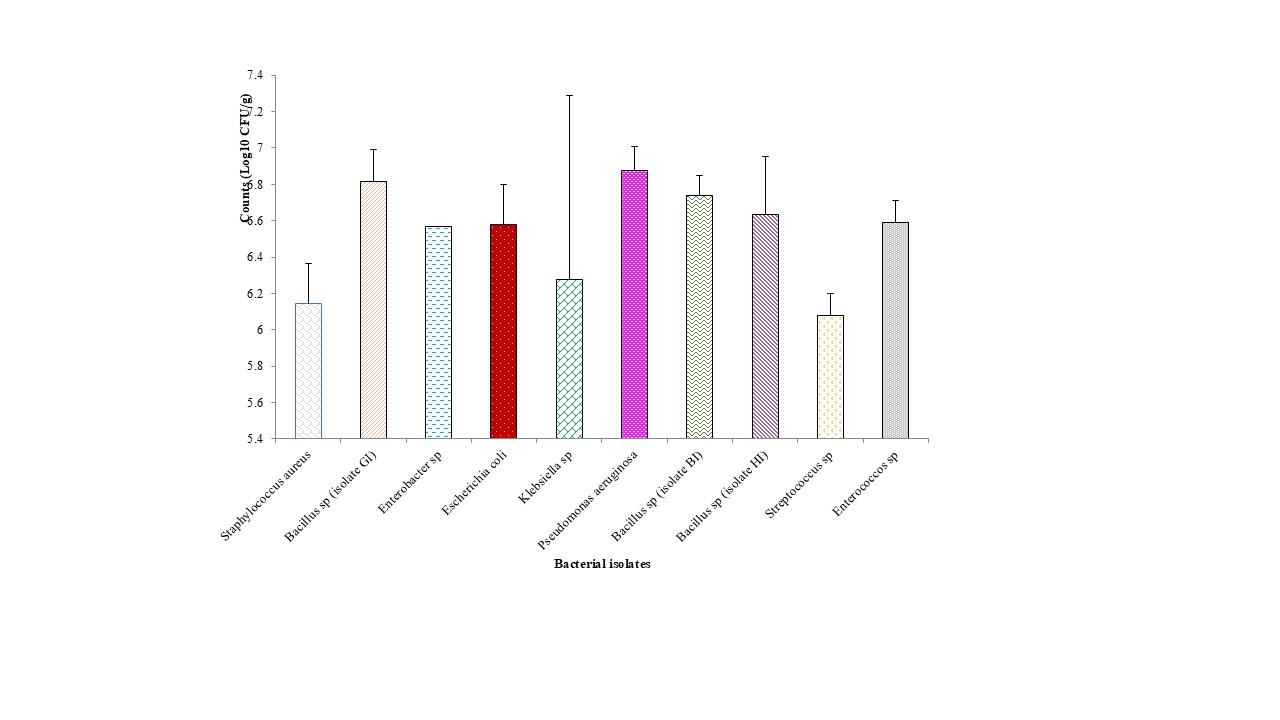
The soil is an important sink for waste disposal which has become a serious environmental challenge due to the associated impacts. This study was a comparative study of the bacterial communities across three municipal solid wastes (MSW)-contamianted soils with a pristine soil in Uyo, Akwa Ibom State, Nigeria; it further screened and molecularly identified the best MSW utilizers among the bacterial isolates obtained from culture-dependent analysis using an enrichment-based assay and Sanger sequencing, respectively. The viable counts from the Oron road site were significantly (P < 0.05) higher with 1.47 × 10⁸ ± 1.3 CFU g⁻¹ at the 0-15cm depth and 1.21 × 10⁸ ± 2.1 CFU g⁻¹ at the 15- 30 cm depth. The lowest counts were observed from Ikot Ekpene road site with 9.9 × 10⁷ ± 0.8 CFU g⁻¹ at the 0-15 cm depth and 3.8 × 10⁷ ± 2.0 CFU g⁻¹ at the 15-30 cm depth. In all, the pristine soil location had the lowest counts of 4.5 x 10⁴ ± 0.3 CFU g⁻¹ at the 0-15 cm depth and 2.1 × 10⁴ ± 0.3 CFU g⁻¹ at the 15-30 cm depth. The culture-based characterization identified the isolates as species from the genera Staphylococcus, Enterobacter, Pseudomonas, Escherichia, etc. with those of Bacillus having the highest occurrence. Bacillus sp., Enterococcus sp. and Pseudomonas aeruginosa were found across the dumpsites (100%). Bacillus sp. and Pseudomonas aeruginosa showed the strongest growth under the degradation-screening conditions and were identified as Bacillus sp. (PV810158.1) and Pseudomonas aeruginosa (PV810157.1), respectively by the 16S rRNA gene analysis. As indicated, these waste-contaminated soils harbor high bacterial population than the selected pristine soil and different species that are actively using the waste materials as energy and carbon sources for their growth and development. The municipal solid waste-utilization ability of the isolates makes them promising candidates for application in bioeconomy where they can be used for biological MSW treatment and bioremediation of MSW-contaminated soils.
References
Afshan, N., Ghouri, M., Hayat, A., & Nadeem, S. G. (2023). Molecular and biochemical characterization of solid waste biodegrading microbes isolated form the municipal waste dump site of Karachi City. Acta Brasiliensis, 7(1), 7–13. DOI: 10.22571/2526-4338629
Ajibade, F. O., Adelodun, B., Ajibade, T. F., & Akinbile, C. O. (2021). The threatening effects of open dumping on soil at waste disposal sites of Akure city, Nigeria. International Journal of Environment and Waste Management, 27(2), 127–146. https://doi.org/10.1504/IJEWM.20-21.10030610
Alaoui, A., & Diserens, E. (2018). Mapping Soil Compaction - A Review. Current Opinion in Environmental Science and Health 5, 60 – 66.
Aniefiok-Ezemonye, I. C. (2023). An appraisal of the urban status of Uyo as a capital city, 1987-2012. Nigerian Journal of African Studies, 5(1), ISSN 2734-3146
Antai, S. P., Asitok, A. D., Tiku, D. R., & Louis, O. I. (2016). Microbiological analysis and solid waste biodegradation potential among some selected isolates from municipal dumpsite in Calabar municipality, Cross River State. IJISET - International Journal of Innovative Science, Engineering & Technology, 3(11), 2348–7968.
Atofarati, E. O., Adogbeji, V. O., & Enweremadu, C. C. (2025). Sustainable smart waste management solutions for rapidly urbanizing African cities. Utilities Policy, 95,101961. https://-doi.org/10.1016/j.jup.2025.101961.
Bassey, U., Tom, A. O., Okono, V., John, M., Sinn, M., Bassey, A., Luke, U., & Nara, S. (2024). Characteristics and Management of Municipal Solid Waste in Uyo, Akwa Ibom State. Scientific Reports. 14(1),10971. doi: 10.1038-/s41598-024-61108-0.
Buragohain, P., Nath, V. & Sharma, H. K. (2020). Microbial degradation of waste: A review. Currents in Pharmaceutical Research, 7 (1), 106-125.
Chavhan, D. M., & Wagh, G. S. (2013). Physicochemical and microbiological analysis of soil around Lonand City and adjoining area of MIDC. International Journal of Life Sciences, 1(1), 67–70
Chen, M., Li, Q., Liu, C., Meng, E., & Zhang, B. (2025). Microbial Degradation of Lignocellulose for Sustainable Biomass Utilization and Future Research Perspectives. Sustainability, 17(9), 4223. https://doi.org/10.3390/su17094-223
Chhetri, B. R., Silwal, P., Jyapu, P., Maharjan, Y., Lamsal, T., & Basnet, A. (2022). Biodegradation of organic waste using Bacillus species isolated from soil. International Journal of Applied Sciences and Biotechnology, 10(2), 104–111. https://doi.org/10.3126/ijasbt.v10-i2.44303
Dave, S., & Das, J. (2021). Role of microbial enzymes for biodegradation and bioremediation of environmental pollutants: Challenges and future prospects. In G. Saxena, V. Kumar, & M. P. Shah (Eds.), Bioremediation for environmental sustainability (pp. 325–346). Elsevier. https://doi.org/10.1016/-B978-0-12-820524-2.00013-4.
Dey, S., Veerendra, G. T. N., Anjaneya Babu, P. S. S., Phani Manoj, A., & Nagarjuna, K. (2023). Degradation of Plastics Waste and its Effects on Biological Ecosystems: a Scientific Analysis and Comprehensive Review. Biomedical Materials and Devices, 2, 223 – 231.
Dincă, L. C., Grenni, P., Onet, C., & Onet, A. (2022). Fertilization and Soil Microbial Community: A Review. Applied Sciences, 12(3), 1198. https://doi.org/10.-3390/app12031198
Eneh, O.C. (2025). Municipal solid waste recycling, resource recovery and public health challenges: a regional case study of Enugu, Nigeria. Discover Public Health, 22, 291. https://doi.org/-10.1186/s12982-025-00688-2
Enerijiofi, K. E., & Ekhaise, F. O. (2019). Physicochemical and Microbiological Qualities of Government Approved Solid Waste Dumpsites in Benin City. Dutse Journal of Pure and Applied Sciences (DUJOPAS), 5, 12 – 22.
Fierer, N. (2017). Embracing the unknown: Disentangling the Complexities of the Soil Microbiome. Nature Reviews in Microbiology, 15, 579 – 590.
Gebrekidan, T. K., Weldemariam, N. G., Hidru, H. D., Gebremedhin, G. G. , & Weldemariam, A. K. (2024). Impact of improper municipal solid waste management on fostering One Health approach in Ethiopia - challenges and opportunities: A systematic review. Science in One Health, 3, 100081. doi: 10.1016/j.soh.2024.100081
Hao, J., Chai, N., Lopes, L. D., Ordóñez, A., Wright, E., Archontoulis, S., & Schachtman, D. P. (2021). The Effects of Soil Depth on the Structure of Microbial Communities in Agricultural Soils in Iowa (United States). Applied Environmental Microbiology, 87, 1 – 17.
Ikon, G. M., Nelson, A. V., & Ekere, A. A. (2022). Microbiological assessment of waste dump site at Obo market, Obong Ntak, Etim Ekpo LGA, Akwa Ibom State. Journal of Advances in Microbiology Research, 3(2), 56–58.
Ikot, C., Iwatt, M., & Bassey, M. (2026). Culture-based analysis, phenotypic virulence screening and 16S rRNA-based bacterial community profiling of human-impacted rural streams in Akwa Ibom State, Nigeria. Researchers Journal of Science and Technology, 6(7), 11–32. https://doi.org/10.83080/rejost.v-ol6no7.324
Iwatt, M. U., Akan, O. D., & Etim, I-I. N. (2026). Emerging mitigation techniques for microbially-influenced corrosion in the oil and gas industry. The Microbe, 11, 100702. https://doi.org/10.1016-/j.microb.2026.100702
Iyanyi, N. G., Ataga, A. E., Soala, M. & Jumbo, J. (2020). Molecular Characterization of Bacteria Associated with a Dumpsite Soil in University of Port Harcourt, Rivers State, Nigeria. Nigerian Journal of Microbiology, 34(2), 5294-5302.
Kumar, P. (2021). A review on effect of pesticide and fertilizer. Asian Journal of Research in Business Economics and Management, 11(11), 1-7. https://doi.org/10.5958/2249-7307.20-21.00054.2
Kumar, R., Kumar, M., Kumar, O., & Thakur, T. (2026). Effects of pesticides on soil microbial activities. Agri Articles, 6(2), 360–367
Kumar, S., Stecher, G., Suleski, M., Sanderford, M., Sharma, S., & Tamura, K. (2024). MEGA12: Molecular Evolutionary Genetic Analysis Version 12 for Adaptive and Green Computing. Molecular Biology Evolution. 41(12): msae263. doi: 10.1093/molbev/msa-e263.
Liu, S. J. (2023). Special Issue "Biodegradation and Environmental Microbiomes": Editorial. Microorganisms. 11(5):1253. doi: 10.3390/microorganisms11051253
Locher, K., Belanger, C., Eckbo, E., Caza, M., Velapatino, B., & Charles, M. (2022). Automated 16S Sequencing using R – Based Analysis Module for Bacterial Identification. Microbiology Spectrum, 10 (2), e0040822.
Mahajan, R. (2023). Environment and Health Impact of Solid Waste Management in Developing Countries: A Review. Current World Environment, 18(1),18-29. DOI: 10.12944/CWE.18.1.3
Meena, M. D., Dotaniya, M. L., Meena, B. L., Rai, P. K., Antil, R. S., Meena, H. S., Meena, L. K., Dotaniya, C. K., Vijay, S. M., Avijit G., Meena, K. N., Amit, K. S., Meena, V. D., Moharana, P. C., Sunita, K. M., Srinivasarao, A. L., Meena, D. K., Meena, S. C., Prajapat, M. & Meena, R. B. (2023). Municipal Solid Waste: Opportunities, Challenges and Management Policies in India: A Review. Waste Management Bulletin, 1, 1 – 15.
Mohammadi, K., Heidari, G., Khalesro, S. and Sohrabi, Y. (2011). Soil management, microorganisms and organic matter interactions: A review. African Journal of Biotechnology, 10(84), 19840-19849.
Nanda, S., & Berruti, F. (2021). Municipal Solid Waste Management and Landfilling Technologies: A Review. Environmental Chemistry Letter, 19, 1433–1456.
Nicholas, S. A., Michael, N. G., Olowosaye, P. J., Ebiloma, D. A., & Etim, E. O. (2026). Assessment of soil physicochemical properties and enzymatic activities in municipal dumpsites of Uyo, Akwa Ibom State, Nigeria. Asian Soil Research Journal, 10(2):90-106. DOI: 10.9734-/asrj/2026/v10i2233
Njewa, J. B., Mweta, G., & Sumani, J. (2025). Biswick, T. T. The impact of dumping sites on air, soil and water pollution in selected Southern African countries: challenges and recommendations. Water Emerg. Contam. Nanoplastics. 4, 3. http://dx.doi.org/-10.20517/wecn.2024.71.
Nta, S. A., Ayotamuno, M. J., Igoni, A. H. and Okparanma, R. H. (2020). Soil Quality as affected by Municipal Solid Waste Dumping. Asian Soil Research Journal, 3(2): 1-11. DOI: 10.9734/ASRJ/2020/-v3i230067
Obour, P. B., Schjønning, P., Peng, Y., & Munkholm, L. J. (2017). Subsoil Compaction Assessed by Visual Evaluation and Laboratory Methods. Soil Tillage Research, 173, 4–14.
Okey, A. E., Augustina, O. N., Ogechi, N. P. & Emmanuel, O. O. (2025). Assessing the Ecological Footprints of Open Dumping in Olum, Anambra State, Nigeria: Implications for Human and Environmental Sustainability, International Journal of Advanced Multidisciplinary Research and Studies, 5(5), 871-874. DOI: https://doi.org-/10.62225/2583049X.2025.5.5.5018
Okey, E., Umana, E., Markson, A.-A., & Okey, P. A. (2013). Municipal solid waste characterization and management in Uyo, Akwa Ibom State, Nigeria. In Sustainable development and planning. 173,639 - 648. https://doi.org/10.2495-/SDP130531
Onuoha, U. N., Nwachukwu, I., Appeh, O. G., Obasi, V. N.,, & Alaebo, P. O. (2026). Microbiological and physicochemical characterization of soil samples from dumpsites in Lagos, Nigeria. Journal of Advances in Chemical Sciences, 2 (1), 16-29.
Pondei, J. O., & Okeke, C. C. (2024), Bacterial Isolates of Soils of Different Waste Types in Yenagoa Central Solid Waste Dumpsite, Nigeria. Research Journal of Biotechnology and Life Science, 4(1), 12-22.
Pysarenko, P., Samojlik, M., Taranenko, A., Taranenko, S., Mostoviak, I., Berezovskyi, A., Dychenko, O., Shpyrna, V., Zhylin, O., & Oliynyk, A. (2025). Microbiological evaluation of biodegradation processes of solid waste in reclaimed landfills. Rocznik Ochrona Środowiska, 27, 354 - 360. https://doi.org/10.54740/ros.2025.028.
Remigios, M. V. (2010). An overview of the management practices at solid waste disposal sites in African cities and towns. Journal of Sustainable Development in Africa, 12(7), 233-239.
Savich, V., & Novik, G. (2016, October). Waste biodegradation and utilization by Pseudomonas species. Journal of Microbiology, Biotechnology and Food Sciences, 6(2), 851 – 857. https://doi.org/10.15414/jmbfs.2016.6.2.851-857
Selvarajan, R., Ogola, H., Kalu, C. M., Sibanda, T., & Obize, C. (2022). Bacterial Communities in Informal Dump Sites: A Rich Source of Unique Diversity and Functional Potential for Bioremediation Applications. Applied Sciences, 12(24), 12862. https://doi.org/10.3390/app122412862
Singh, S. (2025). The role of environmental microbiota in bioremediation: Harnessing bacteria for pollutant degradation. Clinical Medicine and Health Research Journal, 5(2), 1228– 1240. https://doi.org/10.18535/cmhrj.v5i02.464
Uchenna, C. E., Umoren Akpan, G., & Ugochukwu, I. C. (2026). Isolation and characterization of bacteria from municipal solid for production of enzymes for waste degradation. International Journal of Research and Innovation in Applied Science, 11(15), 40. https://doi.org/10.51584/IJRIAS.2-026.111500005
Udochukwu, U., & Yakubu J. M. (2022). Impact of Solid Waste on Soil Bacterial and the Municipal Waste Management in Some Communities of Lagos Island. Nigerian Journal of Biotechnology. 39(2): 20-28.
Udotong, I. R., Uko, M. P. & Udotong, J. I. R. (2015) Microbial Diversity of a Remote Aviation Fuel Contaminated Sediment of a Lentic Ecosystem in Ibeno, Nigeria. Journal of Environmental & Analytical Toxicology. 5: 320. doi:10.4172/2161-0525.1000320
Udoumoh, U. I., Ahuchaogu, I. I. & Ayotamuno, J. M. (2023). Assessment of municipal solid waste disposal and management challenges in major cities in Nigeria: A case study of Uyo, Nigeria. IIARD International Journal of Geography & Environmental Management (IJGEM), 9(5), 88. https://doi.org/10.56201/ijgem.v9.no5.2023.pg88.100
Ugwu, E., Iroha, I., Ejikeugwu, C., Onochie, C., & Nwachi, C. (2017). Isolation and Characterization of Bacteria and Fungi Associated with Biodegradation of Municipal Solid Wastes in Abakaliki Metropolis, Nigeria. International Journal of Environment, Agriculture and Biotechnology (IJEAB). 2: 1294 – 1304.
Uko, M. P., Udotong, I. R., & Umana, S. I. (2019). Homology-dependent metagenomics study of agricultural soils in Akwa Ibom State, Nigeria. Journal of Bio Innovation, 8(1), 54–65
Uko, M., Udotong, I., Ofon, U., Umana, S., & Abraham, N. (2020). Effect of hydrocarbon contamination on the microbial diversity of freshwater sediments within Akwa Ibom State, Nigeria. Journal of Chemical, Environmental and Biological Engineering, 4(2), 32 – 38. https://doi.org/10.11648-/j.jcebe.20200402.1
Wemedo, S. A., Boisa, N., Oduah, R. N., & Obunwo, C. C. (2020). Biophysicochemical Characterization of Soils of Abandoned and Active Solid Waste Dumpsites in Rivers State Southern Nigeria. International Journal of Research and Innovation in Applied Science (IJRIAS) 5(3): 126 – 133.
World Health Organization (2020). Air Quality and Health. WHO Press, Geneva.
Downloads
Published
How to Cite
Issue
Section
License
Copyright (c) 2026 Ekaette U. Ekanem, Maria E. Bassey, Mfoniso U. Iwatt

This work is licensed under a Creative Commons Attribution-NonCommercial-ShareAlike 4.0 International License.
Unless a different licence is clearly indicated for a particular article, articles published in the journal are made available under the Creative Commons Attribution 4.0 International (CC BY 4.0) licence. This licence permits others to read, download, copy, distribute, share, adapt, and build upon the published work, including for commercial purposes, provided that appropriate credit is given to the original author(s), the article is properly cited, and any changes made to the original work are clearly indicated.