Epidemiological Patterns of Schistosomiasis in North Central Nigeria: A Systematic Review of Prevalence, Risk Factors, and Control Strategies
DOI:
https://doi.org/10.83080/rejost.vol6no7.323Keywords:
North Central Nigeria, Schistosomiasis, Prevalence, Systematic review, Risk factors, Control strategiesAbstract
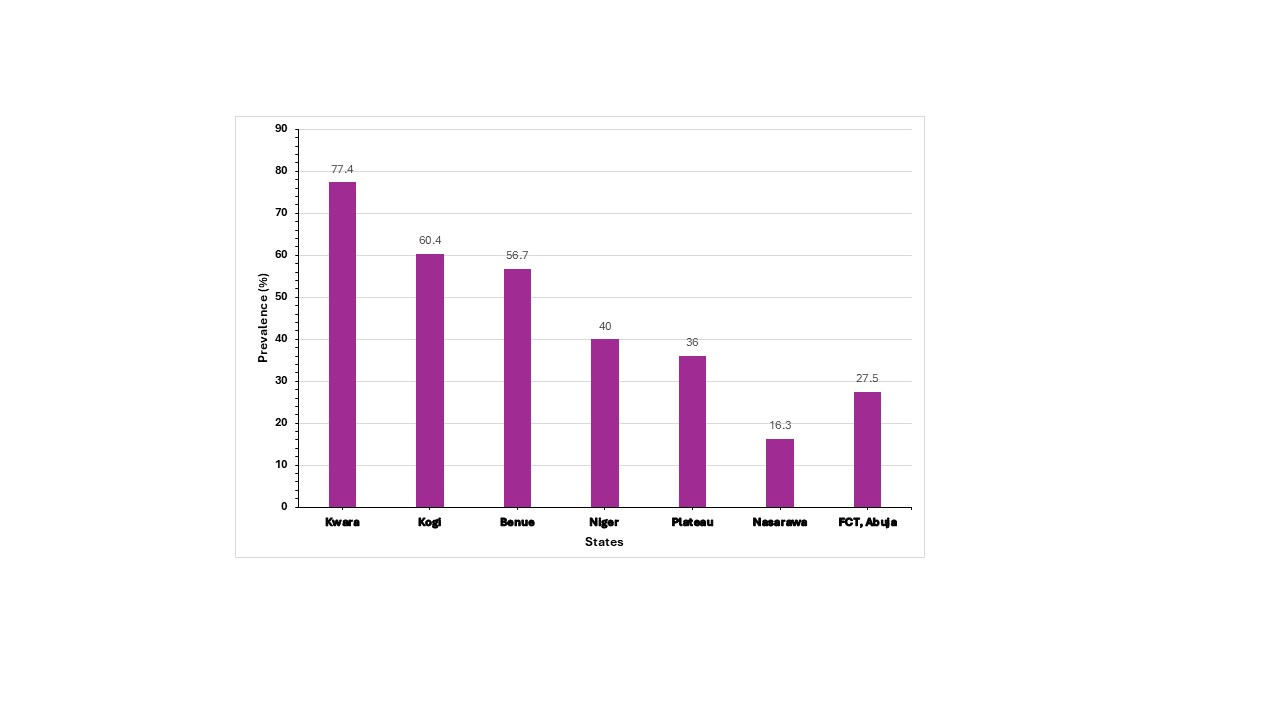
Schistosomiasis remains one of the most important neglected tropical diseases and constitutes a persistent public health challenge in Nigeria, which bears the highest global burden of infection. Although numerous epidemiological studies have been conducted in North Central Nigeria, no previous systematic review has comprehensively synthesized regional evidence on disease prevalence, associated risk factors, diagnostic approaches, and control strategies. This systematic review therefore aimed to synthesize the available evidence on the epidemiological patterns of schistosomiasis in North Central Nigeria to provide region-specific evidence for disease control and policy. The review followed the Preferred Reporting Items for Systematic Reviews and Meta-Analyses (PRISMA) 2020 guidelines. A comprehensive search of Google Scholar, PubMed, African Journals Online (AJOL), and ScienceDirect was performed to identify eligible studies published between January 2000 and July 2026. Methodological quality was assessed using the Joanna Briggs Institute (JBI) Critical Appraisal Checklist for prevalence studies, and findings were synthesized narratively because of substantial heterogeneity among included studies. Nineteen studies involving 13,729 participants across six states and the Federal Capital Territory met the inclusion criteria. The included studies demonstrated moderate to high methodological quality, with JBI quality scores ranging from 5 to 7 out of 9. Reported prevalence ranged from 2.07% to 77.4%, with Schistosoma haematobium identified as the predominant species and school-aged children representing the most affected population. Frequent contact with contaminated freshwater bodies was the most consistently reported risk factor, while urine filtration and the Kato–Katz technique were the principal diagnostic methods. Mass drug administration with praziquantel, health education, and improvements in water, sanitation, and hygiene (WASH) were the most frequently recommended control strategies. These findings highlight the need for strengthened integrated schistosomiasis control programmes that combine preventive chemotherapy with improved WASH infrastructure, health education, snail control, and enhanced surveillance to support progress toward the WHO 2030 elimination targets. This review is the first to systematically synthesize epidemiological evidence specifically for North Central Nigeria, thereby providing region-specific evidence to guide public health planning and resource allocation. However, interpretation of the findings should consider the substantial heterogeneity in study designs, populations, and diagnostic methods, which precluded quantitative meta-analysis and limited direct comparison across studies.
References
Abba, A., Maryam, F. H., & Murtala, U. M. (2022). Schistosomiasis prevalence and risk factors among primary school-aged children in Nasarawa Town, Nasarawa State, Nigeria. Nasarawa Journal of Science and Technology, 9(1), 32–40.
Abdulazeez, S. U., Oniemola, J. M., Abdullahi, D. M., & Hussein, S. (2024). Prevalence of urinary schistosomiasis among primary school pupils in Adankolo, Lokoja, Kogi State. Custech International Journal of Education, 1(2), 229–239.
Abdulkareem, B. O., Habeeb, K. O., Kazeem, A., Adam, A. O., & Samuel, U. U. (2018). Urogenital schistosomiasis among schoolchildren and the associated risk factors in selected rural communities of Kwara State, Nigeria. Journal of Tropical Medicine, 2018, Article 6913918. https://doi.org/10.1155/2018/-6913918
Alade, T., Ta-Tang, T. H., Nassar, S. A., Akindele, A. A., Capote-Morales, R., Omobami, T. B., & Berzosa, P. (2023). Prevalence of Schistosoma haematobium and intestinal helminth infections among Nigerian school-aged children.
Diagnostics, 13(4), 759. https://doi.org-/10.3390/diagnostics13040759
Ally, O., Kanoi, B. N., Ochola, L., Nyanjom, S. G., Shiluli, C., Misinzo, G., & Gitaka, J. (2024). Schistosomiasis diagnosis: Challenges and opportunities for elimination. PLoS Neglected Tropical Diseases, 18(7), e0012282. https://doi.-org/10.1371/journal.pntd.0012282
Amaechi, E. C., Nwachukwu, P. C., Ezekiel, O. O., Nwadike, C. C., Bonfere, F. E., & Adewole, S. S. (2024). Prevalence of intestinal schistosomiasis infection and associated risk factors among school-aged children in Jebba, Moro Local Government Area, Kwara State, North Central Nigeria. Journal of Applied Sciences and Environmental Management, 28(8), 2443 - 2448.
Abdullahi, M., & Saidu, T. B. (2011). Prevalence of urinary schistosomiasis among school-aged children in Wushishi Local Government Area of Niger State, Nigeria. Bayero Journal of Pure and Applied Sciences, 4(2), 53–55.
Carbonell, C., Rodríguez-Alonso, B., López-Bernús, A., Almeida, H., Galindo-Pérez, I., Velasco-Tirado, V., ... & Belhassen-García, M. (2021). Clinical spectrum of schistosomiasis: An update. Journal of Clinical Medicine, 10(23), 5521. https:-//doi.org/10.3390/jcm10235521
Dawet, A. (2012). Prevalence and intensity of Schistosoma haematobium among residents of Gwong and Kabong in Jos North Local Government Area, Plateau State, Nigeria. International Journal of Biological and Chemical Sciences, 6(4), 1557–1565.
Ejinaka, O. R., Obeta, M. U., Agbalaka, P. I., & Ajik, H. (2019). Current review of diagnosis and control of urogenital schistosomiasis. The Diagnostics, 3(1), 40–57.
Ezeh, C. O., Onyekwelu, K. C., Akinwale, O. P., Shan, L., & Wei, H. (2019). Urinary schistosomiasis in Nigeria: A 50-year review of prevalence, distribution and disease burden. Parasite, 26, 19. https://doi.org/10.1051/parasite/2019018
Goselle, N. O., Anegbe, D., Imandeh, G. N., Dakul, D. A., Onwuliri, A. C. F., Abba, O. J., ... & Abelau, A. M. (2010). Schistosoma mansoni infections amongst school-aged children in Jos, Nigeria. Science World Journal, 5(1), 42-45.
Griswold, E., Eigege, A., Adelamo, S., Mancha, B., Kenrick, N., Sambo, Y., ... & Richards, F. O. (2022). Impact of three to five rounds of mass drug administration on schistosomiasis and soil-transmitted helminths in school-aged children in North-Central Nigeria. The American Journal of Tropical Medicine and Hygiene, 107(1), 132–140.
Inalegwu, F., & Amuta, E. U. (2026). The burden of malnutrition: Correlating body mass index (BMI) with urinary schistosomiasis intensity among school-aged children in Makurdi, Nigeria. International Journal of Multi-disciplinary Research and Education (IJMCER), 8(1), 21–28.
Jacob, S. M., Akinbo, S. Y., Oluwole, A. S., Agbana, T., Omoruyi, Z., Okungbowa, M. A., ... & Akinbo, F. O. (2025). Impact of praziquantel mass drug administration on schistosomiasis: A comparison of prevalence and risk factors between treated school-aged children and untreated adults in Abuja, Nigeria. International Journal of Environmental Research and Public Health, 22(5), 672.
Klohe, K., Koudou, B. G., Fenwick, A., Fleming, F., Garba, A., Gouvras, A., ... & Rollinson, D. (2021). A systematic literature review of schistosomiasis in urban and peri-urban settings. PLoS Neglected Tropical Diseases, 15(2), e0008995.
Lo, N. C., Bezerra, F. S. M., Colley, D. G., Fleming, F. M., Homeida, M., Kabatereine, N., ... & Garba, A. (2022). Review of 2022 WHO guidelines on the control and elimination of schistosomiasis. The Lancet Infectious Diseases, 22(11), e327-e335.
Mahmud, I. A. (2024). Prevalence and risk factors of urinary schistosomiasis among children living near streams in Kpakungu, Fadukpe, and Chanchaga Area of Minna, Niger State. IMAN Medical Journal, 10(2), 38-44.
Munn, Z., Barker, T. H., Moola, S., Tufanaru, C., Stern, C., McArthur, A., ... & Aromataris, E. (2020). Methodological quality of case series studies: An introduction to the JBI critical appraisal tool. JBI Evidence Synthesis, 18(10), 2127–2133.
Nyamngee, A., Yusuf, K. A., Edungbola, L. D., Akanbi, A. A., II, Njaan, A. A., & Olubiyi, S. K. (2018). Evidence of endemic Schistosoma haematobium infection among school-aged children in Shonga Community, Edu Local Government Area, Kwara State, Nigeria. Tropical Journal of Health Sciences, 25(1), 14–20.
Nzelu, I. N., Denen, I., Saa-Aondo, J. S., Yakubu, A., & Ofukwu, R. A. (2025). Survey of schistosomiasis and associated risk factors amongst residents of suburban riverine communities in Makurdi, Nigeria: Zoonotic implication. Sokoto Journal of Veterinary Sciences, 23(1), 14–27.
Obiora, E., Priscilla, A., Uchejeso, O., Oluchi, E., Ibanga, I., Paul, J., & Dabo, H. U. (2022). Prevalence of Urinary Schistosomiasis among Pupils in Pilot Primary School Jos North Local Government of Plateau State, Nigeria. South Asian Res J Nurs Health Care, 4(2), 15-20.
Ogongo, P., Nyakundi, R. K., Chege, G. K., & Ochola, L. (2022). The road to elimination: Current state of schistosomiasis research and progress towards the end game. Frontiers in Immunology, 13, 846108.
Oluwole, A. S., Ekpo, U. F., Nebe, O. J., Akpan, N. M., Jacob, S. M., Amazigo, U. V., & Stothard, J. R. (2022). The new WHO guideline for control and elimination of human schistosomiasis: Implications for the Schistosomiasis Elimination Programme in Nigeria. Infectious Diseases of Poverty, 11(1), 111.
Opeyemi, O., Simon-Oke, I. A., & Olusi, T. A. (2024). Distribution of urinary schistosomiasis and associated risk factors in school-age children in Kwara State, Nigeria. Journal of Parasitic Diseases. 49(1), 215-223. https://doi.-org/10.1007/s12639-024-01745-4
Page, M. J., McKenzie, J. E., Bossuyt, P. M., Boutron, I., Hoffmann, T. C., Mulrow, C. D., ... & Moher, D. (2021). The PRISMA 2020 statement: An updated guideline for reporting systematic reviews. BMJ, 372, n71. https://doi.org/10.1136/bmj.n-71
Reuben, R. C., Tanimu, H., & Musa, J. A. (2013). Epidemiology of urinary schistosomiasis among secondary school students in Lafia, Nasarawa State, Nigeria. Epidemiology, 3(2).
Sunday, J. O., Oso, O. G., Babamale, A. O., & Ugbomoiko, S. U. (2025). Persistence of Schistosoma haematobium transmission and associated risk factors among patients living in Kwara State, North-Central Nigeria after mass drug administration. Ceylon Journal of Science, 54(2). 527-538. https://doi.org-/10.4038/cjs.v54i2.8463
Umar, V., Adang, K. L., Ngwamah, J. S., AboveGodwin, O. G., & Dakum, Y. D. (2023). Prevalence of Schistosoma infections among residents along River Niger, Lokoja, Kogi State, Nigeria. Direct Research Journal of Public Healthand Environmental Technology, 8(9), 129-136. https://doi.org/10.26765-/DRJPHET20819035
Verjee, M. A. (2019). Schistosomiasis: Still a cause of significant morbidity and mortality. Research and Reports in Tropical Medicine, 10, 153–163.
Yusuf, L., Odoh, V. U., & Shittu, T. B. (2025). Re-assessment of urinary schistose-miasis amongst primary school pupils in Okengwe, Kogi State, Nigeria: Implications for public health. Dutse Journal of Pure and Applied Sciences, 11(4A), 365–374.
Downloads
Published
How to Cite
Issue
Section
Categories
License
Copyright (c) 2026 Raliat A. Aladodo, Abdulquadri Mohammed, Rasheed B. Ibrahim, Mutiu A. Alabi

This work is licensed under a Creative Commons Attribution-NonCommercial-ShareAlike 4.0 International License.
Unless a different licence is clearly indicated for a particular article, articles published in the journal are made available under the Creative Commons Attribution 4.0 International (CC BY 4.0) licence. This licence permits others to read, download, copy, distribute, share, adapt, and build upon the published work, including for commercial purposes, provided that appropriate credit is given to the original author(s), the article is properly cited, and any changes made to the original work are clearly indicated.