Enhancement of Biogas Production and Archaeal Diversity during Anaerobic Digestion of Bacterially Pretreated Coconut (<em>Cocos nucifera L</em>) Coir
DOI:
https://doi.org/10.83080/rejost.vol6no4.291Keywords:
Pretreatment, Anaerobic digestion, Biogas, Lignocellulosic biomass, Cellulose-degrading bacteriaAbstract
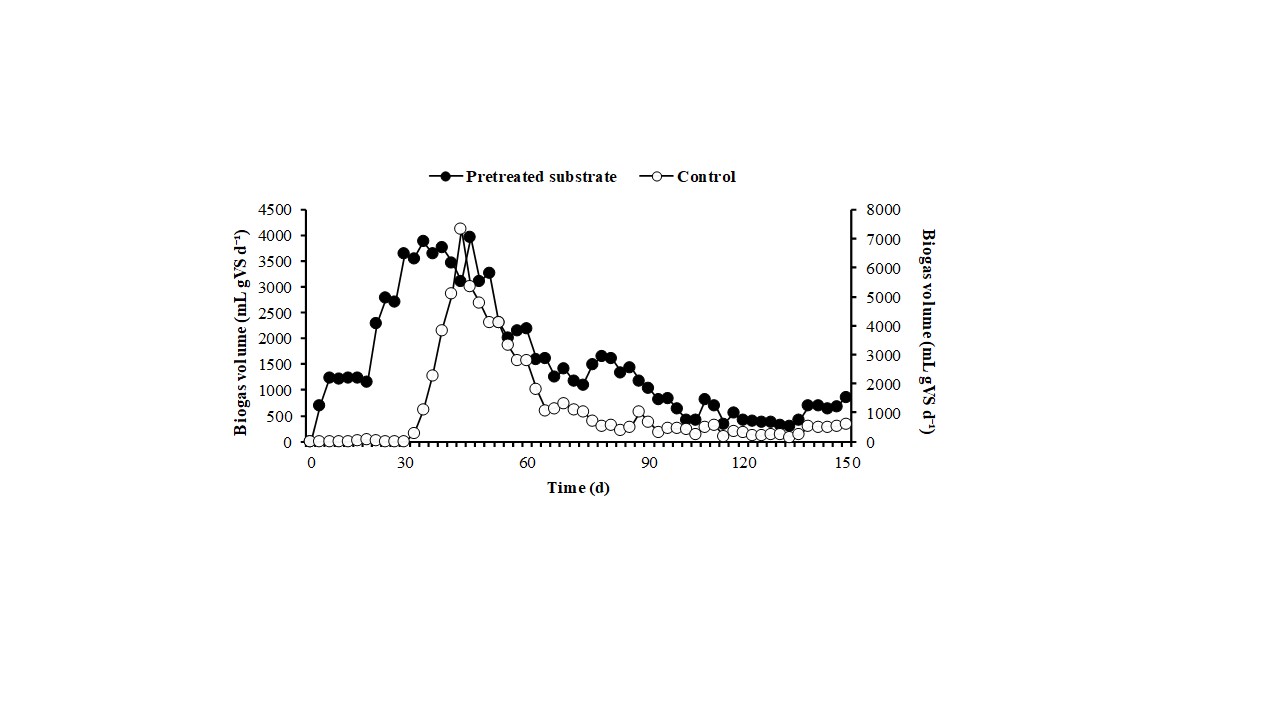
Growing demand for renewable energy and sustainable waste management has increased interest in anaerobic digestion of lignocellulosic biomass. However, efficient conversion of such substrates remains limited by their complex structure, particularly the recalcitrant lignin–cellulose matrix, which restricts microbial accessibility and results in low hydrolysis efficiency. Coconut coir, a widely available agricultural waste, is particularly resistant to biodegradation, thereby limiting its potential as a feedstock for high-yield biogas production. This study aimed to enhance biogas production from coconut coir lignocellulosic biomass through pretreatment with cellulose-degrading bacteria. Over 150 days, the biogas production process was evaluated using standard protocols. Initial screening of bacteria from poultry feces revealed very high cellulose hydrolytic capacities, ranging from 9 to 11 mm. The identified bacteria included Bacillus megaterium, Bacillus licheniformis, Lactobacillus plantarum, Bacillus cereus, and Bacillus subtilis. Coconut coir was pretreated with a consortium of these bacteria, buffered with plantain peel ash solution, and inoculated with aged cow dung for anaerobic digestion. A control digester without bacterial pretreatment was also maintained. The total biogas yield in the control digester at the end of 150 days digestion was 67,105 mL, whereas the pretreated substrate produced 88,355 mL. The mean methane content was 45 ± 25% in the control and 56 ± 17% in the pretreated substrate, indicating a significantly higher methane yield in the pretreated substrate (p < 0.05). Sequencing of PCR products amplified using universal 16S rRNA primers generated 244, 240 sequences, of which 236, 200 (97%) were identified as bacterial, 2,443 (1%) as archaeal, and 5,597 (2.3%) remained unclassified. The bacterial pretreatment of coconut coir enhanced both biogas volume and methane yield and influenced the abundance and diversity of the methanogenic archaeal community. These findings suggest that utilizing cellulose-degrading bacteria from poultry feces and an organic buffering agent can significantly improve biogas production and methane content, providing a sustainable approach to biomass utilization.
References
Adamu, A. A. (2014). Effect of substrate on biogas yield. Global Journal of Engineering Research, 13, 35–39.
Achinas, S., & Euverink, G. J. (2019). Elevated biogas production from the anaerobic co-digestion of farmhouse waste: Insight into the process performance and kinetics. Waste Management & Research: the journal of the International Solid Wastes and Public Cleansing Association, ISWA, 37(12), 1240–1249. https://doi.org/10.11-77/0734242X19873383
Ali, N., Zhang, Q., Liu, Z. Y., Li, F. L., Lu, M., & Fang, X. C. (2020). Emerging technologies for the pretreatment of lignocellulosic materials for bio-based products. Applied Microbiology and Biotechnology, 104(2), 455–473. https://doi.org/10.1007/s00253-019-101-58-w
Ali, S. S., Al-Tohamy, R., Manni, A., Luz, F. C., Elsamahy, T., & Sun, J. (2019). Enhanced digestion of bio-pretreated sawdust using a novel bacterial consortium: Microbial community structure and methane-producing pathways. Fuel, 254, 115604. https://doi.org/10.1016/j.fuel.2019.06.012
Angelidaki, I., Karakashev, D., Batstone, D. J., Plugge, C. M., & Stams, A. J. (2011). Biomethanation and its potential. Methods in Enzymology, 494, 327–351. https://doi.org/10.1016/B978-0-12-3851-12-3.00016-0
Atelge, M. R., Krisa, D., Kumar, G., Eskicioglu, C., Nguyen, D., Chang, S., Atabani, A., Al-Muhtaseb, A., & Unalan, S. (2020). Biogas production from organic waste: Recent progress and perspectives. Waste and Biomass Valorization, 11, 1019–1040.
Baruah, J., Nath, B. K., Sharma, R., Kumar, S., Deka, R. C., Baruah, D. C., & Kalita, E. (2018). Recent trends in the pretreatment of lignocellulosic biomass for value-added products. Frontiers in Energy Research, 6, 141. doi:10.3389/fenrg.2018.00141
Beluhan, S., Mihajlovski, K., Šantek, B., & Šantek, M. I. (2023). The production of bioethanol from lignocellulosic biomass: Pretreatment methods, fermentation, and downstream processing. Energies, 16, 7003.
Blachier, F. (2023). Amino acid-derived bacterial metabolites in the colorectal luminal fluid: Effects on microbial communication, metabolism, physiology, and growth. Microorganisms, 11(5), 1317.
De Vrieze, J., Saunders, A. M., He, Y., Fang, J., Nielsen, P. H., Verstraete, W., & Boon, N. (2015). Ammonia and temperature determine potential clustering in the anaerobic digestion microbiome. Water Research, 75, 312 – 323.
Eduok, S. I. (2013). Evaluation of the impact of engineered nanoparticles on the operation of wastewater treatment plant (Doctoral dissertation).
Eduok, S., John, O., Ita, B., Inyang, E., & Coulon, F. (2018). Enhanced biogas production from anaerobic co-digestion of lignocellulosic biomass and poultry feces using source separated human urine as buffering agent. Frontiers in Environmental Science, 6, 67.
Ezekoye, B. A., & Offor, P. O. (2011). Effect of retention time on biogas production from poultry droppings and cassava peels. Nigerian Journal of Biotechnology, 22, 53–59.
Ferdes, M., Dincă, M. N., Moiceanu, C., Zăbavă, B. S., & Paraschiv, G. (2020). Microorganisms and enzymes used in the biological pretreatment of the substrate to enhance biogas production: A review. Sustainability, 12(17), 7205. https://-doi.org/10.3390/su12177205
Gaur, R. Z., & Suthar, S. (2017). Anaerobic digestion of activated sludge, anaerobic granular sludge and cow dung with food waste for enhanced methane production. Journal of Cleaner Production, 164, 557–566.
Gaur, R. Z., Khan, A. A., & Suthar, S. (2017). Effect of thermal pre-treatment on co-digestion of duckweed (Lemna gibba) and waste activated sludge on biogas production. Chemosphere, 174, 754–763.
Gayathiri, E., Bharathi, B., & Priya, K. (2018). Study of the enumeration of twelve clinically important bacterial populations at 0.5 McFarland standard. International Journal of Creative Research Thoughts, 6(2), 880–893.
Guo, P., Mochidzuki, K., Cheng, W., Zhou, M., Gao, H., Zheng, D., Wang, X., & Cui, Z. (2011). Effects of different pretreatment strategies on corn stalk acidogenic fermentation using a microbial consortium. Bioresource Technology, 102(16), 7526 – 7531.
Gupta, P., Samant, K., & Sahu, A. (2012). Isolation of cellulose-degrading bacteria and determination of their cellulolytic potential. International Journal of Microbiology, 2012, 1–5.
Holt, J. G., Krieg, N. R., Sneath, P. H. A., Staley, J. T., & Williams, S. T. (1994). Bergey’s manual of determinative bacteriology. Williams and Wilkins.
Huang, S., Sheng, P., & Zhang, H. (2012). Isolation and identification of cellulolytic bacteria from the gut of Holotrichia parallela larvae. International Journal of Molecular Sciences, 13, 2563–2577.
Lewin, G. R., Carlos, C., Chevrette, M. G., Horn, H. A., McDonald, B. R., Stankey, R. J., Fox, B. G., & Currie, C. R. (2016). Evolution and ecology of Actinobacteria and their bioenergy applications. Annual Review of Microbiology, 70, 235–254.
Li, P., He, C., Li, G., Ding, P., Lan, M., Gao, Z., & Jiao, Y. (2020). Biological pretreatment of corn straw for enhancing degradation efficiency and biogas production. Bioengineering, 11(1), 251–260.
Liu, Y., & Whitman, W. B. (2008). Metabolic, phylogenetic, and ecological diversity of methanogenic archaea. Annals of the New York Academy of Sciences, 1125(1), 171–189.
Loughrin, J. H., Parekh, R. R., Agga, G. E., Silva, P. J., & Sistani, K. R. (2023). Microbiome diversity of anaerobic digesters is enhanced by microaeration and low frequency sound. Microorganisms, 11(9), 2349.
Maravi, P., & Kumar, A. (2020). Isolation, screening and identification of cellulolytic bacteria from soil. Biotechnology Journal International, 24(1), 1–8.
Mulat, D. G., Huerta, S. G., Kalyani, D., & Horn, S. J. (2018). Enhancing methane production from lignocellulosic biomass by combined steam-explosion pretreatment and bioaugmentation with cellulolytic bacterium Caldicellulo-siruptor bescii. Biotechnology for Biofuels, 11, 19.
Offre, P., Spang, A., & Schleper, C. (2013). Archaea in biogeochemical cycles. Annual Review of Microbiology, 67, 437–457.
Ozturk, B. (2013). Evaluation of biogas production yields of different waste materials. Earth Science Research, 2(1), 165–174.
Paul, S., & Dutta, A. (2018). Challenges and opportunities of lignocellulosic biomass for anaerobic digestion. Resource Conservation and Recycling, 130, 164–174.
Pinotti, L. M., Paulino, L. B., Agnezi, J. C., dos Santos, P. A., da Silva, H. N., Zavarise, J. P., Salomão, G. S. B., & Tardioli, W. P. (2020). Evaluation of different fungi and bacteria strains for production of cellulases by submerged fermentation using sugarcane bagasse as carbon source: Effect of substrate concentration and cultivation temperature. African Journal of Biotechnology, 19(9), 625–635.
Poszytek, K., Cieśkowska, M., Skłodowska, A., & Drewniak, L. (2016). Microbial consortium with high cellulolytic activity for enhanced biogas production. Frontiers in Microbiology, 7, 324.
Pu, Y., Hu, F., Huang, F., Davison, B. H., & Ragauskas, A. J. (2013). Assessing the molecular structure basis for biomass recalcitrance during dilute acid and hydrothermal pretreatments. Biotech-nology for Biofuels, 6, 15.
Rawway, M., Ali, S. G., & Badawy, A. S. (2018). Isolation and Identification of Cellulose Degrading Bacteria from Different Sources at Assiut Governorate (Upper Egypt). Health and Environment, 6, 15–24.
Ritari, J., Koskinen, K., Hultman, J., Kurola, J. M., Kymäläinen, M., Romantschuk, M., Paulin, L., & Auvinen, P. (2012). Molecular analysis of meso- and thermophilic microbiota associated with anaerobic biowaste degradation. BMC Microbiology, 12, 121.
Rossi, E., Becarelli, S., Pecorini, I., Di Gregorio, S., & Iannelli, R. (2022). Anaerobic Digestion of the Organic Fraction of Municipal Solid Waste in Plug-Flow Reactors: Focus on Bacterial Community Metabolic Pathways. Water, 14(2):195. https://doi.org/10.3390/w14020195
Sun, L., Pope, P. B., Eijsink, V. G., & Schnürer, A. (2015). Characterization of microbial community structure during continuous anaerobic digestion of straw and cow manure. Microbial biotechnology, 8(5), 815–827. https://doi.org/10.1111/1751-7915.12298.
Theuer, S., Klang, J., Hülsemann, B., Mächtig, T., & Hassa, J. (2020). Microbiome diversity and community-level change points within manure-based small biogas plants. Microorganisms, 8(8), 1169.
Umana S., Iwatt M., Bassey M, Akan, O. D., Eduok, S. and Ekwenye, U. (2026). Influence of biological pretreatment of coconut husk lignocellulosic biomass for biogas production on archaeal community and volatile fatty acids. BMC Microbiology. https://doi.org/10.1186/ s1-2866-026-05196-0
Vimal, J., Venu, A., & Joseph, J. (2016). Isolation and identification of cellulose degrading bacteria and optimization of the cellulase production. International Journal of Research in BioSciences (IJRBS), 5(3), 58-67. Available at: http://www.ijrbs.in/index.php/ijrbs/article/view/210
Vu, H. P., Nguyen, L. N., Wang, Q., Ngo, H. H., Liu, Q., Zhang, X., & Nghiem, L. D. (2022). Hydrogen sulphide management in anaerobic digestion: A critical review on input control, process regulation, and post-treatment. Bioresource technology, 346, 126-634. https://doi.org/10.1016/j.biortech.2021.-126634.
Wang, P., Wang, H., Qiu, Y., Ren, L., & Jiang, B. (2018). Microbial characteristics in anaerobic digestion process of food waste for methane production - A review. Bioresource technology, 248 (Pt A), 29 – 36. https://doi.org/10.1016-/j.biortech.2017.06.152
Wang, X. J., Yuan, X. F., Wang, H., Li, J., Wang, X., & Cui, Z. J. (2011). Characteristics and community diversity of a wheat straw-colonizing microbial community. African Journal of Biotechnology, 10(40):7853–7861.
Wu, W., Chen, Y., Faisal, S., Khan, A., Chen, Z., Ling, Z., Liu, P., & Li, X. (2016). Improving methane production in cow dung and corn straw co-fermentation systems via enhanced degradation of cellulose by cabbage addition. Scientific Reports 6, 33628 (2016). https://doi.org-/10.1038/srep33628
Yi, J., Dong, B., Jin, J., & Dai, X. (2014). Effect of increasing total solids contents on anaerobic digestion of food waste under mesophilic conditions: performance and microbial characteristics analysis. PloS one, 9(7), e102548. https://doi.org/10.13-71/journal.pone.0102548
Zabidi, N. A., Foo, H. L., Loh, T. C., Mohamad, R., & Abdul Rahim, R. (2020). Enhancement of Versatile Extracellular Cellulolytic and Hemicellulolytic Enzyme Productions by Lactobacillus plantarum RI 11 Isolated from Malaysian Food Using Renewable Natural Polymers. Molecules, 25(11), 2607. https://doi.org/10.3390/molecules25112607
Zhang, C., Su, H., Baeyens, J., & Tan, T. (2014). Reviewing the anaerobic digestion of food waste for biogas production. Renewable and Sustainable Energy Reviews, 38, 383–392.
Zhao, T., Chen, Y., Yu, Q., Shi, D., Chai, H., Li, L., Ai, H., Gu, L., & He, Q. (2019). Enhancement of performance and stability of anaerobic co-digestion of waste activated sludge and kitchen waste by using bentonite. PloS one, 14(7), e0218856. https://doi.org/10.1371/journ-al.pone.0218856.
Ziganshin, A. M., Schmidt, T., Scholwin, F., Il'inskaya, O. N., Harms, H., & Kleinsteuber, S. (2011). Bacteria and archaea involved in anaerobic digestion of distillers grains with solubles. Applied microbiology and biotechnology, 89(6), 2039–2052. https://doi.org/10.1007/s002-53-010-2981-9
Downloads
Published
How to Cite
Issue
Section
Categories
License
Copyright (c) 2026 Researchers Journal of Science and Technology

This work is licensed under a Creative Commons Attribution-NonCommercial-NoDerivatives 4.0 International License.
Unless a different licence is clearly indicated for a particular article, articles published in the journal are made available under the Creative Commons Attribution 4.0 International (CC BY 4.0) licence. This licence permits others to read, download, copy, distribute, share, adapt, and build upon the published work, including for commercial purposes, provided that appropriate credit is given to the original author(s), the article is properly cited, and any changes made to the original work are clearly indicated.